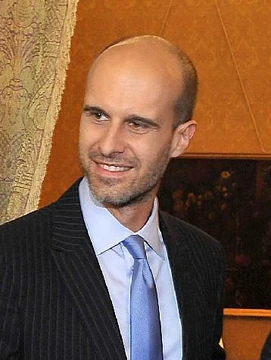
Alejandro González Iñárritu
Mexican filmmaker known for psychological dramas and back-to-back Best Director Oscars.

Alejandro González Iñárritu (born 15 August 1963) is a Mexican filmmaker known for making modern psychological drama films about the human condition. His most notable films include *Amores perros* (2000), *21 Grams* (2003), *Babel* (2006), *Biutiful* (2010), *Birdman* (2014), *The Revenant* (2015), and *Bardo* (2022). His projects have garnered five Academy Awards, three BAFTA Awards, and four Golden Globe Awards. He is the third director to win the Academy Award for Best Director back-to-back, following John Ford and Joseph L. Mankiewicz, and the only director to have won the DGA Award for Outstanding Directing two years in a row.
- awards
- Five Academy Awards, three BAFTA Awards, four Golden Globe Awards
Verified Timeline
Lore & Background
Iñárritu's early career began in 1984 as a radio host at Mexico's WFM, where he pieced together playlists into a loose narrative arc and interviewed artists like Robert Plant, David Gilmour, Elton John, Bob Geldof, and Carlos Santana. He later became the youngest producer for Televisa. From 1987 to 1989, he composed music for six Mexican feature films. In the early 1990s, he created Z Films with Raúl Olvera, writing, producing, and directing short films and advertisements. He studied under theater director Ludwik Margules and Judith Weston in Los Angeles. In 1995, he wrote and directed his first TV pilot, *Detrás del dinero*, starring Miguel Bosé. His first feature film, *Amores perros* (2000), premiered at Cannes and won the Critics' Week Grand Prize. It was the first installment in his thematic 'Death trilogy' with writer Guillermo Arriaga and was nominated for the Academy Award for Best Foreign Language Film. In 2002, he directed 'Powder Keg' for BMW's *The Hire*, winning the Cannes Gold Lion Advertising Award. His second feature, *21 Grams* (2003), starred Benicio del Toro, Naomi Watts, and Sean Penn; Penn won the Volpi Cup for Best Actor at Venice, and Del Toro and Watts received Oscar nominations. *Babel* (2006) comprised four interrelated stories set in Morocco, Mexico, the United States, and Japan. It competed at Cannes, where Iñárritu won the Best Director Award, becoming the first Mexican-born director to do so. *Babel* received seven Oscar nominations, including Best Picture and Best Director. After this third collaboration, Iñárritu and Arriaga parted ways professionally. In 2010, Iñárritu directed *Biutiful*, starring Javier Bardem, who won Best Actor at Cannes. The film was nominated for the Academy Award for Best Foreign Language Film, and Bardem was nominated for Best Actor. In 2014, Iñárritu won three Academy Awards for directing, co-writing, and co-producing Best Picture winner *Birdman or (The Unexpected Virtue of Ignorance)*. He also won the Golden Globe Award for Best Director for *Birdman*. He won the Academy Award for Best Director for *The Revenant* (2015), making him the third director to win back-to-back, after John Ford and Joseph L. Mankiewicz. He is the only director to have won the DGA Award for Outstanding Directing two years in a row. In 2019, he was president of the jury for the 72nd Cannes Film Festival.
Reader's Guide
Alejandro González Iñárritu is a significant figure in contemporary cinema, recognized for his psychologically intense, multi-narrative films that explore the human condition. His early work, particularly the 'Death trilogy' (*Amores perros*, *21 Grams*, *Babel*), established a signature style of interwoven stories across different cultures and languages, earning critical acclaim and multiple award nominations. *Amores perros* premiered at Cannes in 2000 and won the Critics' Week Grand Prize. *21 Grams* competed for the Golden Lion at Venice. *Babel* won him the Best Director Award at Cannes in 2006, the first Mexican-born director to win that prize. His later films, *Birdman* and *The Revenant*, demonstrated technical ambition and narrative innovation, winning him back-to-back Academy Awards for Best Director—a feat achieved only by John Ford and Joseph L. Mankiewicz before him. Iñárritu's influence extends beyond traditional filmmaking; he was awarded a Special Achievement Academy Award for his virtual reality installation *Carne y Arena* (2017), the first VR installation presented at the Cannes Film Festival. His career trajectory from radio host at WFM to internationally celebrated director underscores his versatility and impact on global cinema. His presidency of the 2019 Cannes Film Festival jury further cements his status as a leading figure in the film industry.
Did You Know?
- Iñárritu is the only director in history to have won the DGA Award for Outstanding Directing two years in a row.
- He won a Special Achievement Academy Award for his virtual reality installation *Carne y Arena* (2017), the first VR installation ever presented at the Cannes Film Festival.
- Iñárritu was expelled from high school at age 16 or 17 due to poor grades and misbehavior, and briefly ran off to Acapulco after being influenced by the Miloš Forman film *Hair*.
- He worked as a sailor on cargo boats at ages 16 and 18, sailing through the Mississippi River and visiting Europe and Africa.
- The scene in *The Revenant* where Leonardo DiCaprio enters the belly of a dying horse is considered by some Turkish journalists to be a reference to Yılmaz Güney's film *Yol*, which inspired Iñárritu to turn to cinema.
From Radio Waves to the Silver Screen
Iñárritu's path to cinema was anything but conventional. He first found his voice in 1984 at WFM, Mexico's most popular rock radio station, where he crafted playlists into loose narrative arcs and interviewed luminaries like Robert Plant, David Gilmour, Elton John, Bob Geldof, and Carlos Santana. He also wrote and broadcast short audio stories. His media career accelerated when he became the youngest producer at Televisa, Latin America's largest mass-media company. Between 1987 and 1989, he composed music for six Mexican feature films, a period during which he met writer Guillermo Arriaga and began the screenwriting partnership that would define his career. In the early 1990s, he co-founded Z Films with Raúl Olvera, producing short films and advertisements. He studied directing under theater director Ludwik Margules and Judith Weston in Los Angeles before writing and directing his first television pilot, Detrás del dinero, in 1995. Iñárritu has often noted that music shaped his artistic sensibility more profoundly than film itself.
Threads of Mortality: The Intersecting-Story Vision
Iñárritu's filmography is unified by a preoccupation with the human condition, expressed most powerfully through his signature structure of interlocking narratives. His 2000 debut, Amores perros, wove three separate lives in Mexico City into a single tapestry of fate and consequence, earning the Critics' Week Grand Prize at Cannes and launching the career of Gael García Bernal. Together with screenwriter Guillermo Arriaga, he built what became known as the "Death trilogy," continuing the intersected-stories architecture in 21 Grams (2003), which followed three characters orbiting a single car accident, and Babel (2006), which linked disparate lives across continents. Beyond that triptych, his later features—Biutiful (2010), Birdman (2014), The Revenant (2015), and Bardo (2022)—each interrogated mortality, identity, and the fragility of existence from a psychological-drama angle. The recurring thread is not merely structural but philosophical: Iñárritu returns again and again to how chance, grief, and self-deception collide within a single human life.
A Historic Streak at the Top of the Industry
Few directors in modern cinema history have matched Iñárritu's concentrated run of top-tier recognition. He won the Best Director prize at the 2006 Cannes Film Festival and later served as jury president at the 72nd edition in 2019. His most extraordinary achievement came in consecutive years: the Academy Award for Best Director for both Birdman (2014) and The Revenant (2015), making him only the third person in Oscar history to accomplish that feat, after John Ford and Joseph L. Mankiewicz. He also became the sole director ever to claim the DGA Award for Outstanding Directing in back-to-back years. His broader trophy cabinet includes five Academy Awards, three BAFTA Awards, and four Golden Globe Awards. In 2017, he received a Special Achievement Academy Award for Carne y Arena, a virtual-reality installation that marked the first time a VR piece was presented at the Cannes Film Festival, pushing the boundaries of what a cinematic experience could be.
Sailor, Wanderer, and the Film That Changed Everything
Born the youngest of seven children in Mexico City in 1963, Iñárritu grew up in a family shaped by both privilege and sudden loss. His maternal grandfather had served as a justice on Mexico's Supreme Court, and the family name carries Basque roots. His father, a banker and ranch owner, lost everything to bankruptcy when Alejandro was just five. A poor student, he was expelled from high school at sixteen or seventeen and briefly fled to Acapulco with a girl, inspired by the film Hair. He then left home entirely, working as a sailor on cargo vessels that carried him up the Mississippi and across to Europe and Africa. On his second voyage, his father gave him a thousand dollars, and he spent a year wandering Europe. It was during this period that he saw Yol, the Palme d'Or-winning film by Kurdish director Yılmaz Güney. Iñárritu has credited that single screening as the moment he decided to make films, and he has suggested that the visceral horse-belly scene in The Revenant echoes a similar image in Yol. He later returned to Mexico City to study communications at Universidad Iberoamericana, carrying the geography of his travels into the settings of his future films.
Frequently Asked Questions
Who is Alejandro González Iñárritu?
He is a Mexican filmmaker born on August 15, 1963, best known for crafting deeply psychological dramas that probe the complexities of the human condition.
What are Alejandro González Iñárritu's most celebrated films?
His signature works include Amores perros, 21 Grams, Babel, Biutiful, Birdman, The Revenant, and Bardo, each exploring fragmented narratives and raw emotional landscapes.
What major awards has Alejandro González Iñárritu received?
He has collected four Academy Awards, three BAFTA Awards, and four Golden Globe Awards over the course of his career.
What is Alejandro González Iñárritu's directing style?
He favors non-linear storytelling, interwoven character arcs, and unflinching portrayals of mortality and moral ambiguity across his feature films.
Why is Alejandro González Iñárritu's Best Director record significant?
He became the third director in Academy Award history to win the Best Director prize in consecutive years, a feat that underscores his sustained creative impact.
More in Renowned Film Directors & Producers 1-24
Spotted an error? Know more?
This is a living reference — every entry is fact-audited, and reader corrections feed straight into our audit queue. Suggest an edit · See this site's audit record