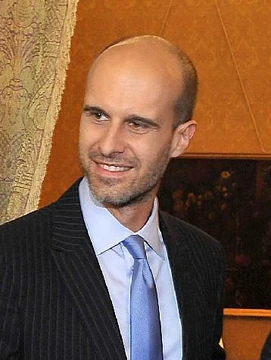
Alejandro Jodorowsky
Filmmaker, director, and father of Adán Jodorowsky.

He is the father of Adán Jodorowsky, Brontis Jodorowsky and Axel Jodorowsky, and the grandfather of Alma Jodorowsky. He directed the film Santa Sangre (1989), in which his son Adán played the role of young Fénix and won the Saturn Award for Best Performance by a Younger Actor. Jodorowsky also directed The Dance of Reality (2013), in which Adán appeared and composed the soundtrack, and Poesía sin fin, the second part of La Danza De La Realidad, in which Adán acts the main character (young Alejandro Jodorowsky).
- nationality
- Chilean and French
Verified Timeline
Lore & Background
Alejandro Jodorowsky is the father of Adán Jodorowsky, who was born on 29 October 1979 to Jodorowsky and Mexican actress Valérie Trumblay. Adán has appeared in seven films to date, including his father's Santa Sangre (1989), for which he won the Saturn Award for Best Performance by a Younger Actor. Jodorowsky directed The Dance of Reality (2013), and Adán appeared in the film and composed its soundtrack. Jodorowsky also directed Poesía sin fin, the second part of La Danza De La Realidad, with Adán playing the main character (young Alejandro Jodorowsky). Adán has also directed his own works, including the movie The Voice Thief, which won five prizes for Best Director and Best Movie, and in 2014 Diane Pernet selected this movie to compete at the ASVOFF festival.
Reader's Guide
For fans of Alejandro Jodorowsky, his son Adán Jodorowsky (also known as Adanowsky) is a French-Mexican musician, director and actor who has collaborated on several of his father's projects. Adán appeared as young Fénix in Santa Sangre (1989), winning the Saturn Award for Best Performance by a Younger Actor. He later appeared in The Dance of Reality (2013) and composed its soundtrack, and played the main character (young Alejandro Jodorowsky) in Poesía sin fin. Adán has also built his own career, releasing solo albums including Étoile Éternelle (2006), El Ídolo (2008), Amador (2011), and Ada (2014). He won the UFI award for 'Best International Artist Of The Year' and 'Best Live Show' for Amador. His film The Voice Thief won five prizes for Best Director and Best Movie, and was selected for the ASVOFF festival in 2014.
Did You Know?
- Alejandro Jodorowsky is the father of Adán Jodorowsky, who was born on 29 October 1979 to Jodorowsky and Mexican actress Valérie Trumblay.
- Adán Jodorowsky won the Saturn Award for Best Performance by a Younger Actor in 1989 for his role as young Fénix in Alejandro Jodorowsky's film Santa Sangre.
- Adán Jodorowsky composed the soundtrack for and appeared in his father's film The Dance of Reality (2013).
- Adán Jodorowsky plays the main character (young Alejandro Jodorowsky) in his father's film Poesía sin fin, the second part of La Danza De La Realidad.
- Adán Jodorowsky's film The Voice Thief won five prizes for Best Director and Best Movie.
Family Roots and Early Screen Debut
Adán Jodorowsky, born on 29 October 1979, carries a surname that immediately evokes one of cinema's most idiosyncratic auteurs. He is the son of Chilean-born French filmmaker Alejandro Jodorowsky and Mexican actress Valérie Trumblay, placing him at the intersection of two of Latin America's most expressive artistic traditions. He grew up alongside his brothers Brontis and Axel and later became the uncle of Alma Jodorowsky. His first major screen appearance came in his father's celebrated film Santa Sangre, where he portrayed the young Fénix. That performance earned him the Saturn Award for Best Performance by a Younger Actor in 1989, a striking recognition for a child actor working within his father's distinctive cinematic universe. Although he has appeared in only seven films to date, that early role anchored his presence in the industry and set the trajectory for a career that would eventually span acting, music, and direction across multiple languages and continents.
The Adanowsky Musical Identity
In late October 2006, Adán stepped into the spotlight as a solo musician under the stage name "Adanowsky," releasing his debut album Étoile Éternelle. The lead single, "L'idole" (also issued in Spanish as "El Ídolo"), narrated the story of a waiter craving attention and dreaming of idol status—a theme that would reverberate through his subsequent work. His second album, again titled El Ídolo, arrived in 2008 and achieved considerable success in numerous countries. By 2011, his third solo record, Amador, had earned him the UFI award for both "Best International Artist of the Year" and "Best Live Show." His collaborative reach expanded further: he recorded "You are the one" and "Dime Cuándo" with Devendra Banhart, wrote the song "La Cándida" for Alizée's album, and in 2012 produced the first solo golden album of León Larregui, lead singer of the Mexican band Zoé. In 2014 he released the album Ada, continuing a steady stream of original compositions and performances.
Behind the Camera
Beyond his musical output, Adán has forged a distinct identity as a director and composer. He created works including Echek (2000) and Teou (2001), and directed several projects: Echek, Un Sol Con Corazón, El Ídolo, and Dancing To The Radio. His most ambitious film, The Voice Thief, starred himself alongside Cristóbal Jodorowsky, with Asia Argento as the lead actress. That film earned him five prizes, including Best Director and Best Movie, and in 2014 Diane Pernet selected it to compete at the ASVOFF festival, the first annual festival in the world dedicated to fashion films. He also composed the soundtrack for his father's 2013 film The Dance of Reality, in which he appeared as an actor. In 2015 he directed a music video for "Would You Be Mine" featuring the actress Stoya. Most recently, he took on the role of young Alejandro Jodorowsky in Poesía sin fin, the second part of La Danza De La Realidad.
A Career Spanning Disciplines
Adán Jodorowsky's body of work resists simple categorization. A French-Mexican artist by heritage, he has moved fluidly between acting, composing, producing, and directing over more than two decades. His acting credits include the Julie Delpy film 2 Days in Paris (2007) and his father's later projects, yet his most sustained creative energy has poured into music and filmmaking. His discography includes singles such as "Estoy Mal," "No," "Me Siento Solo," "Dancing to the Radio," and "Would you be mine," reflecting a bilingual artistic practice that bridges French- and Spanish-speaking audiences. His recognition spans multiple fields: a Saturn Award as a young actor, UFI honors for his live performances, and festival selections for his directing work. This cross-pollination of disciplines—writing songs for other artists, producing albums, scoring films, and starring in them—marks him as a genuinely versatile figure in contemporary French-Mexican arts.
Frequently Asked Questions
Who is Alejandro Jodorowsky?
Alejandro Jodorowsky Prullansky (born 17 February 1929 in Tocopilla, Chile) is a Chilean-French avant-garde filmmaker, comic book writer, and performance artist. He is widely regarded as a cult cinema icon whose work fuses graphic surrealism with spiritual and religious provocation.
What are Alejandro Jodorowsky's most famous films?
His three most celebrated features are El Topo (1970), The Holy Mountain (1973), and Santa Sangre (1989). Each film pushes the boundaries of narrative, spectacle, and visual symbolism in ways that have no real parallel in mainstream cinema.
What makes Jodorowsky's filmmaking style so distinctive?
His work is built on violently surreal imagery, a hybrid of mysticism and religious iconography, and a deliberate rejection of conventional story structure. Viewers often describe the experience as hallucinatory, confrontational, and deeply personal.
What has Jodorowsky done beyond directing feature films?
He is the creator of the acclaimed comic book series The Incal and has worked as a performance artist and shamanic practitioner. He also leads workshops that blend theater, psychology, and spiritual exploration, extending his artistic philosophy well outside the screen.
Why is Alejandro Jodorowsky important to cult and experimental cinema?
He is venerated by cult film enthusiasts as a director who completely abandoned Hollywood conventions in favor of deeply personal, psychedelic, and confrontational storytelling. His influence can be traced through generations of experimental filmmakers who embrace visual extremity and spiritual symbolism.
More in Renowned Film Directors & Producers 1-24
Spotted an error? Know more?
This is a living reference — every entry is fact-audited, and reader corrections feed straight into our audit queue. Suggest an edit · See this site's audit record