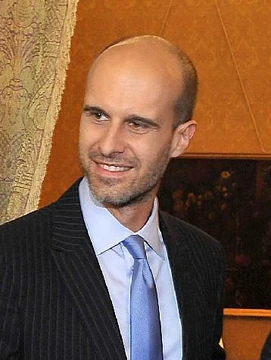
Anthony Mann
American director of film noir, Westerns, and historical epics.

He came to prominence as a skilled director of film noir and Westerns, and for his historical epics.
- field
- Film director, stage actor
- nationality
- American
- known_for
- Film noir, Westerns, historical epics
Lore & Background
Mann started as a theatre actor appearing in numerous stage productions. He then became an assistant director, most notably working for Preston Sturges. He directed several feature films for numerous production companies, including RKO Pictures, Eagle-Lion Films, Universal Pictures, and Metro-Goldwyn-Mayer (MGM). As a director, he often collaborated with cinematographer John Alton. During the 1950s, Mann shifted to directing Western films starring several major stars of the era, including James Stewart. While successful in the United States, these films became appreciated and studied among French film critics, several of whom would become influential with the French New Wave. The other three were Nicholas Ray, Richard Brooks, and Robert Aldrich. Both films were produced by Samuel Bronston.
Reader's Guide
Anthony Mann's significance lies in his mastery of multiple genres—film noir, Westerns, and historical epics—and his ability to produce taut, visually striking films on modest budgets. His collaborations with cinematographer John Alton defined the noir look of the late 1940s, while his eight-film partnership with James Stewart redefined the psychological Western. Mann's work was particularly influential on French New Wave critics; Jacques Rivette ranked him among the four great postwar Hollywood directors. His later large-scale epics, such as El Cid and The Fall of the Roman Empire, demonstrated his ambition and command of spectacle. Mann's career reflects a transition from low-budget genre filmmaking to grand historical cinema, and his films continue to be studied for their visual style, narrative economy, and psychological depth.
Did You Know?
- Mann was born Emil Anton Bundsmann in San Diego, California.
- He directed James Stewart in eight films, including Winchester '73 and The Naked Spur.
- Mann died of a heart attack in Berlin before finishing A Dandy in Aspic; Laurence Harvey completed the film uncredited.
Frequently Asked Questions
Who is Anthony Mann?
Anthony Mann was an American film director and stage actor who rose to prominence in mid-20th-century Hollywood. He is best remembered for his work across film noir, Westerns, and sweeping historical epics.
What genres is Anthony Mann most associated with?
Mann became particularly renowned for directing taut film noirs and gritty Westerns, while also tackling large-scale historical epics. His range across these three genres set him apart from many of his contemporaries.
Why is Anthony Mann considered important in film history?
His distinctive visual style and ability to blend tension with character depth influenced a generation of directors working in noir and the Western. Fans and scholars still cite his body of work as a cornerstone of American genre filmmaking.
More in Renowned Film Directors & Producers 1-24
Spotted an error? Know more?
This is a living reference — every entry is fact-audited, and reader corrections feed straight into our audit queue. Suggest an edit · See this site's audit record