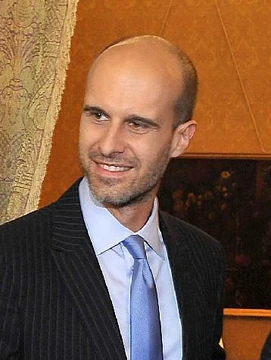
Ang Lee
Taiwanese filmmaker acclaimed for emotionally charged, award-winning films.

Ang Lee (born October 23, 1954) is a Taiwanese filmmaker whose films are known for their emotional charge and exploration of repressed and hidden emotions. He has received international critical and popular acclaim and numerous accolades, including three Academy Awards, five BAFTA Awards, and three Golden Globe Awards. He is the only filmmaker to win the Golden Bear twice and one of only four filmmakers to win the Golden Lion twice, and received the BAFTA Fellowship in 2020.
- born
- October 23, 1954
- field
- Filmmaker
- nationality
- Taiwanese
- known_for
- Emotionally charged films exploring repressed emotions; Father Knows Best trilog
Verified Timeline
Lore & Background
Ang Lee was born on October 23, 1954, to a waishengren family in a military dependents' village in Chaochou, Pingtung, Taiwan. Both of his parents moved from De'an, Jiangxi, to Taiwan after the Chinese Civil War ended in 1949. He grew up in a household that put a heavy emphasis on education. In 1956, when Lee was 2 years old, his family moved to Hualien because his father became Principal of Taiwan Provincial Hualien Normal School. Lee has mentioned that the eight years he lived in Hualien were the happiest time of his life before he went north to study at National Arts School. He studied at Provincial Tainan First Senior High School where his father was principal, but after failing the Joint College/University Entrance Examination twice, he entered the National Arts School (now National Taiwan University of Arts), graduating in 1975. Seeing Ingmar Bergman's film The Virgin Spring (1960) was a formative experience for him. After mandatory military service in the Republic of China Navy, Lee went to the US in 1979 to study at the University of Illinois at Urbana–Champaign, graduating with a Bachelor of Fine Arts in theater in 1980. There he met his future wife, Jane Lin, also a student from Taiwan pursuing her PhD. He then enrolled at the Tisch School of the Arts of New York University, receiving his M.F.A. in film production. He was a classmate of Spike Lee and worked on the crew of his thesis film, Joe's Bed-Stuy Barbershop: We Cut Heads. During graduate school, Lee finished a 16mm short film, Shades of the Lake (1982), which won the Best Drama Award in Short Film in Taiwan. His thesis work, Fine Line (1984), won NYU's Wasserman Award for Outstanding Direction and was chosen for broadcast by PBS. After graduating in 1985, Lee struggled to find work despite interest from the William Morris Agency, spending several years unemployed while continuing to write screenplays with his wife's support. In 1990, Lee submitted two screenplays, Pushing Hands and The Wedding Banquet, to a competition sponsored by the Government Information Office of R.O.C., and they came in first and second, respectively. This brought him to the attention of Hsu Li-kong, who invited Lee to direct Pushing Hands (1991). The film was a success in Taiwan, receiving eight nominations in the Golden Horse Film Festival. Inspired by that success, Hsu collaborated with Lee on The Wedding Banquet (1993), which won the Golden Bear at the 43rd Berlin International Film Festival and was nominated as Best Foreign Language Film in both the Golden Globe and the Academy Awards. In 1994, Hsu invited Lee to return to Taiwan to make Eat Drink Man Woman, a box office hit that was critically acclaimed and received Best Foreign Language Film nominations in the Golden Globe, Academy Awards, and BAFTAs. These three films, starring Taiwanese actor Sihung Lung, form what has been called Lee's Father Knows Best trilogy. Lee's Hollywood breakthrough came with Sense and Sensibility (1995), his first English-language film, which won the Golden Bear at the Berlin Film Festival, was nominated for seven Academy Awards, and won Best Adapted Screenplay for Emma Thompson. He later directed The Ice Storm (1997), which competed at Cannes for the Palme d'Or and won the Best Screenplay award. After the revisionist Western Ride with the Devil (1999) received mixed reviews and was a box office bomb, Lee returned to Chinese-language film with Crouching Tiger, Hidden Dragon (2000), which became the highest grossing foreign film in many countries including the US and UK. Other notable films include Brokeback Mountain (2005), Lust, Caution (2007), Life of Pi (2012), Hulk (2003), Billy Lynn's Long Halftime Walk (2016), and Gemini Man (2019).
Reader's Guide
Ang Lee's significance lies in his ability to bridge Eastern and Western cinematic traditions, often focusing on repressed emotions and family dynamics. His Father Knows Best trilogy—Pushing Hands (1991), The Wedding Banquet (1993), and Eat Drink Man Woman (1994)—established him in Taiwan, exploring relationships and conflicts between tradition, modernity, and Eastern and Western cultures. Sense and Sensibility (1995) marked his successful transition to English-language filmmaking; Emma Thompson described working with Lee, noting how taken aback he was when actors asked questions or provided suggestions, something uncommon in Chinese culture, but once bridged, she remembered having 'the most wonderful time because his notes were so brutal and funny.' Janet Maslin of The New York Times praised the adaptation as 'a sparkling, colorful and utterly contemporary comedy of manners.' The Ice Storm (1997) was praised by Angie Errigo of Empire: 'Lee seems incapable of making a less than outstanding movie,' adding 'the real beauty of this film is the way in which Lee shifts his story from sex farce to youth drama to tragic despair.' Crouching Tiger, Hidden Dragon (2000) was praised by Michael Rechtshaffen of The Hollywood Reporter: 'for his first Chinese-language assignment since 1994's Eat Drink Man Woman, Lee tries a little martial arts on for size – with jaw-droppingly exhilarating results.' Lee's films have earned critical and popular acclaim, with multiple Academy Awards and international festival honors. He is the only filmmaker to win the Golden Bear twice and one of only four to win the Golden Lion twice. The BAFTA Fellowship in 2020 recognized his lasting impact on film.
Did You Know?
- Ang Lee is the only filmmaker to win the Golden Bear twice and one of only four filmmakers to win the Golden Lion twice.
- Lee's father was the principal of the high school Lee attended, and Lee failed the Joint College/University Entrance Examination twice before entering the National Arts School.
- Seeing Ingmar Bergman's film The Virgin Spring (1960) was a formative experience for Lee.
- Lee was a classmate of Spike Lee at NYU and worked on the crew of Spike Lee's thesis film, Joe's Bed-Stuy Barbershop: We Cut Heads.
- Lee submitted two screenplays, Pushing Hands and The Wedding Banquet, to a competition in 1990, and they came in first and second, respectively.
Satirical Premise and Festival Context
Where the 2011 original lampooned the Philippine independent film scene and the ethical compromises of filmmakers chasing foreign festival recognition, this sequel turns its satirical gaze squarely on the mainstream commercial industry. Marlon Rivera directed the project, with Chris Martinez penning a script that dissects how formulaic commercial romantic movies have become so predictable that even the acting within them can be sorted into categories. The narrative centers on a fictional director, Rainier de la Cuesta, and his line producer Jocelyn, who navigate the pressures of mounting a big-budget romantic picture, giving the satire a concrete production-floor setting.
Cast Architecture and Layered Roles
The ensemble cast operates on a fascinating meta-level, blending fictionalized versions of real Filipino actors with entirely invented characters. Jericho Rosales appears as a fictionalized version of himself, whom Domingo's character wants cast as her love interest Cesar. Joel Torre plays himself as a renowned actor the production team hopes to secure for that same role.
Critical Reception and Thematic Praise
Reviewers responded warmly to the film's comedic execution and its pointed industry commentary. Cruz praised Domingo for playing the same hilariously histrionic version of herself established in the first movie. Bubbles Salvador of PEP acknowledged that the sequel relied on a familiar formula but argued it still showcased Domingo at her peak, never appearing self-conscious while deliberately overacting or contorting her body to deliver exaggerated dialogue. Salvador concluded that the film, without adopting a preachy tone, functions as an eye-opener regarding the diversity of movie audiences and suggested that the tension between commercial viability and artistic quality is a conflict that can be resolved over time.
Franchise Evolution Beyond the Screen
This continuation follows Domingo's character as she takes on her directorial debut, pushing the meta-narrative further into new creative territory. Domingo reprised her signature role in this theatrical adaptation, proving the character's comedic energy translates effectively to a live stage. The franchise's journey from a 2011 indie satire to a 2016 mainstream comedy, then to a streaming mockumentary and finally a PETA stage production, illustrates how a single comedic premise can sustain itself across multiple media formats in the Philippine entertainment landscape.
Frequently Asked Questions
Who is Ang Lee?
Ang Lee is a Taiwanese-born filmmaker, born in 1954, who has built a career crafting deeply emotional cinema. His work frequently centers on characters struggling with suppressed feelings and unspoken desires within family or cultural contexts.
What are Ang Lee's most acclaimed films?
His most celebrated works include Crouching Tiger, Hidden Dragon, Brokeback Mountain, and Life of Pi. The Father Knows Best trilogy—Pushing Hands, The Wedding Banquet, and Eat Drink Man Woman—also stands as a defining body of his early career.
How many Academy Awards has Ang Lee won?
Ang Lee has taken home three Best Director Oscars for his work on the big screen. He has also collected five BAFTA Awards and three Golden Globe Awards over the course of his career.
What is unique about Ang Lee's international festival record?
He holds the rare distinction of winning the Berlin Film Festival's Golden Bear on two separate occasions. He is also one of just four directors in history to claim Venice's Golden Lion twice.
What recurring themes define Ang Lee's filmmaking style?
His films consistently explore the tension between what people feel and what they allow themselves to express. Whether set in sweeping martial-arts landscapes or quiet suburban backyards, his stories revolve around repressed longing and the weight of unspoken truth.
More in Renowned Film Directors & Producers 1-24
Spotted an error? Know more?
This is a living reference — every entry is fact-audited, and reader corrections feed straight into our audit queue. Suggest an edit · See this site's audit record