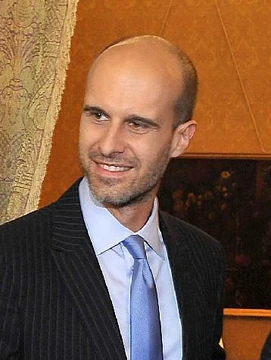
Alexander Sokurov
Russian filmmaker known for single-shot Russian Ark and Golden Lion winner Faust.

Alexander Nikolayevich Sokurov (born 14 June 1951) is a Russian filmmaker. His most significant works include a feature film, Russian Ark (2002), filmed in a single unedited shot, and Faust (2011), which was honoured with the Golden Lion, the highest prize for the best film at the Venice Film Festival.
- born
- 14 June 1951
- field
- Filmmaker
- nationality
- Russian
- known_for
- Russian Ark (single unedited shot), Faust (Golden Lion winner)
Verified Timeline
Lore & Background
Sokurov was born in Podorvikha, Irkutsky District, in Siberia, into a military officer's family. He graduated from the History Department of the Nizhny Novgorod University in 1974 and entered one of the VGIK studios the following year. There he became friends with Tarkovsky and was deeply influenced by his film Mirror. Most of Sokurov's early features were banned by Soviet authorities. His film Mournful Unconcern was nominated for the Golden Bear at the 37th Berlin International Film Festival in 1987. Mother and Son (1997) was his first internationally acclaimed feature film. It was entered into the 20th Moscow International Film Festival where it won the Special Silver St. George. Susan Sontag included two Sokurov features among her ten favorite films of the 1990s, saying: "There's no director active today whose films I admire as much." In 2006, he received the Master of Cinema Award of the International Filmfestival Mannheim-Heidelberg.
Reader's Guide
Sokurov has filmed a tetralogy exploring the corrupting effects of power. The first three installments were dedicated to prominent 20th-century rulers: Moloch (1999), about Hitler, Taurus (2001), about Lenin, and The Sun (2005) about Hirohito. In 2011, Sokurov shot the last part of the series, Faust, a retelling of Goethe's tragedy. The film won the Golden Lion at the 68th Venice International Film Festival. Russian Ark (2002) remains his most commercially and critically successful film, acclaimed primarily for its visually hypnotic images and single unedited shot. The military world of the former USSR is one of Sokurov's ongoing interests. Three of his works, Spiritual Voices: From the Diaries of a War, Confession, From the Commander's Diary and Soldier's Dream revolve around military life. In 1994 Sokurov accompanied Russian troops to a post on the Tajikistan-Afghanistan border, resulting in Spiritual Voices, a 327-minute cinematic meditation on the war and the spirit of the Russian army. In 2010 Sokurov launched his personal course at the Kabardino-Balkarian State University in Nalchik. In 2015, 12 students graduated from his course, including Kantemir Balagov, Vladimir Bitokov, Kira Kovalenko, and Alexander Zolotukhin. In 2022, Sokurov criticized the Kremlin and opposed the Russian invasion of Ukraine; in June 2022 he was denied the right to leave Russia. His film Fairytale was banned in Russia, with no specific reason given.
Did You Know?
- Sokurov's film Faust (2011) won the Golden Lion, the highest prize at the Venice Film Festival.
- Russian Ark (2002) was filmed in a single unedited shot.
- Sokurov was born in Podorvikha, Irkutsky District, in Siberia, into a military officer's family.
- In 1994, Sokurov accompanied Russian troops to a post on the Tajikistan-Afghanistan border, resulting in the 327-minute film Spiritual Voices: From the Diaries of a War.
- Sokurov's film Fairytale was banned in Russia with no specific reason given.
From National Showcase to International Stage
The years following the end of the 1967–1974 military junta saw the festival absorb the raw political energy of a country rediscovering its freedoms, yet it never abandoned its commitment to art-house work.
Competitions, Markets, and the Architecture of Discovery
The festival's programming is built around three distinct competitive tracks, each serving a different creative purpose. Beyond competition, the Agora section functions as a developmental marketplace connecting international film professionals, and it has earned a reputation as one of the most active and rapidly expanding film markets in the world. The festival also weaves in masterclasses, exhibitions, live musical performances, and workshops as sidebar programming.
A Constellation of Filmmakers and Performers
Over its decades of operation, the festival has drawn an extraordinary roster of names to its stages and jury panels.
Venues, Audiences, and a Regional Anchor
The festival's physical footprint is as distinctive as its programming. Every November, more than eighty thousand audience members fill these spaces, joined by hundreds of Greek and international guests who include major figures from the global film industry. For professionals working across Greece and the wider Southeast European region, the festival functions as an indispensable networking and discovery platform, bridging local creative communities with the broader international conversation around independent and emerging cinema.
Frequently Asked Questions
Who is Alexander Sokurov?
He is a Russian filmmaker born on 14 June 1951, widely recognized for his meditative, visually restrained approach to cinema. His career spans several decades of feature and short films that emphasize contemplation over conventional narrative pacing.
Why is Russian Ark (2002) considered a landmark film?
The feature was captured in one continuous, unedited take as the camera glides through the Hermitage Museum in St. Petersburg, making it one of the longest single-shot films ever completed. Its technical ambition and sweeping historical imagery set it apart from virtually anything else in cinema.
What major award did Sokurov's Faust win?
His 2011 adaptation of Goethe's Faust took home the Golden Lion at the Venice Film Festival, serving as a major international validation of his body of work. The film pairs a dark, fairy-tale tone with striking naturalistic imagery.
What sets Sokurov's directing style apart from mainstream cinema?
He favors long, unhurried takes, natural light, and a quiet observational lens rather than rapid editing or heavy dramatic plotting. His films often meditate on memory, history, and the passage of time, inviting the audience to sit with each image.
Is Alexander Sokurov still making films?
Yes; despite being born in 1951, he has continued to produce new features and shorter works throughout his career. His ongoing output reflects an evolving but consistent artistic vision rooted in patience and visual poetry.
More in Renowned Film Directors & Producers 1-24
Spotted an error? Know more?
This is a living reference — every entry is fact-audited, and reader corrections feed straight into our audit queue. Suggest an edit · See this site's audit record