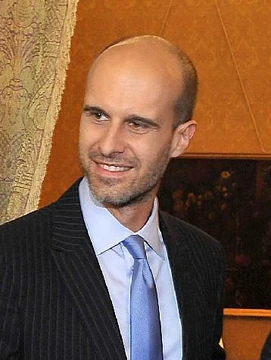
Bong Joon Ho
South Korean filmmaker known for social themes and genre-mixing.

Bong Joon Ho (born September 14, 1969) is a South Korean filmmaker. His work is characterized by emphasis on social and class themes, genre-mixing, dark comedy, and sudden tone shifts. He is the recipient of numerous accolades including three Academy Awards, two British Academy Film Awards, and five Asian Film Awards, as well as nominations for two Golden Globe Awards. In 2017, he was included on Metacritic's list of the 25 best film directors of the 21st century, and in 2020, he was listed as one of the 100 most influential people in the world by Time and among the Bloomberg 50.
- born
- September 14, 1969
- field
- Filmmaker
- nationality
- South Korean
- known_for
- Parasite, The Host, Snowpiercer, Memories of Murder
- notable_awards
- Three Academy Awards, two British Academy Film Awards, five Asian Film Awards
Verified Timeline
Lore & Background
Bong Joon Ho was born on September 14, 1969, in Bongheok-dong, Daegu, South Korea. He has three older siblings. His mother, Park So-young, was a housewife; his father, Bong Sang-gyun, was a graphic designer, industrial designer, professor of art at Yeungnam University, and head of the art department at the National Film Institute. His father retired from Seoul Institute of Technology as a professor of design in 2007 and died in 2017. Bong's maternal grandfather, Park Taewon, was an esteemed author during the Japanese colonial period, best known for his work A Day in the Life of Kubo the Novelist and his defection to North Korea in 1950. His older brother, Bong Joon-soo, is an English professor at Seoul National University; his older sister, Bong Ji-hee, teaches fashion styling at Anyang University. Bong was raised as a Catholic, and his Christian name is Michael. While in elementary school, the family relocated to Seoul, taking up residence in Jamsil-dong by the Han River. He later attended Jamsil High School. In 1988, Bong enrolled in Yonsei University, majoring in sociology. He was an active participant in student demonstrations, frequently subjected to tear gas early in his college years. He served a two-year term in the military in accordance with South Korea's compulsory military service before returning to college in 1992. Bong later co-founded a film club named 'Yellow Door' with students from neighboring universities. As a member of the club, Bong made his first films, including a stop motion short titled Looking for Paradise and 16 mm film short titled Baeksaekin (White Man). He graduated from Yonsei University in 1995.
Reader's Guide
Bong first became known to audiences and gained a cult following with his feature directorial debut, the dark comedy film Barking Dogs Never Bite (2000). He later achieved widespread critical success with his subsequent films: the crime thriller Memories of Murder (2003), the monster film The Host (2006), the science fiction action film Snowpiercer (2013), which served as Bong's English-language debut, and the dark comedy thriller Parasite (2019). The latter three are also among the highest-grossing films in South Korea, with Parasite being the highest-grossing South Korean film in history. All of Bong's films have been South Korean productions, although Snowpiercer, Okja (2017) and Mickey 17 (2025) are Hollywood co-productions with major use of the English language. Two of his films have screened in competition at the Cannes Film Festival—Okja in 2017 and Parasite in 2019; the latter earned the Palme d'Or, which was a first for a South Korean film. Bong won Academy Awards for Best Picture, Best Director, and Best Original Screenplay, making Parasite the first non-English language film to win Best Picture.
Did You Know?
- Bong's maternal grandfather, Park Taewon, was an esteemed author during the Japanese colonial period who defected to North Korea in 1950.
- While in his third year of high school in 1987, Bong saw what he believed to be a monster crawling up a pillar of the Jamsil Bridge, inspiring his film The Host (2006).
- Bong co-founded a film club named 'Yellow Door' with students from neighboring universities while at Yonsei University.
- Bong's father, Bong Sang-gyun, was a professor of design at Seoul Institute of Technology and died in 2017.
- Parasite (2019) was the first non-English language film to win the Academy Award for Best Picture.
Frequently Asked Questions
Who is Bong Joon Ho?
Bong Joon Ho is a South Korean filmmaker born on September 14, 1969, who has built a global reputation for weaving horror, comedy, and sharp social critique into his storytelling. He rose to international stardom with films such as Parasite and The Host.
What are Bong Joon Ho's most famous films?
His most widely recognized works include Parasite, The Host, Snowpiercer, and Memories of Murder. Each of these titles blends genre conventions with pointed commentary on class inequality and societal structures.
What major awards has Bong Joon Ho won?
Throughout his career he has earned three Academy Awards, two BAFTAs, and five Asian Film Awards. He has also been nominated for two Golden Globe Awards.
What makes Bong Joon Ho's directing style stand out?
He is celebrated for abrupt tonal pivots, dry dark humor, and embedding class-conscious themes inside genre frameworks like horror and thriller. Audiences often note how his films refuse to settle into a single emotional register.
How has Bong Joon Ho been recognized beyond box-office success?
Metacritic ranked him among the 25 best directors of the 21st century in 2017. Time magazine later named him one of the 100 most influential people in 2020, and Bloomberg added him to its Bloomberg 50 list.
More in Renowned Film Directors & Producers 1-24
Spotted an error? Know more?
This is a living reference — every entry is fact-audited, and reader corrections feed straight into our audit queue. Suggest an edit · See this site's audit record